

Platform fees quietly eat your margins. Between revenue shares, payment fees, and upsell costs, hosted platforms can take a big slice of your earnings. The solution is simple: build your own course site and keep control of revenue. This guide shows why it matters and how to do it right.
What platform fees really cost
Many course creators focus on monthly subscription costs, but the real expense is revenue sharing. A 10 to 50 per cent commission can erase profit, especially if you are selling at scale. Even when the commission seems small, it compounds as you grow.
Common fee types
- Revenue share on every sale
- Payment processing markups
- Higher fees on lower-tier plans
- Extra charges for affiliates, email, or analytics
Why owning your platform changes everything
When you own your platform, you control pricing, margins, and data. You can run promotions without restrictions, build bundles, and experiment with pricing models that hosted platforms do not allow.
Revenue math: hosted vs self-hosted
Let us say you sell a $199 course and a marketplace takes 30 percent. You lose almost $60 per sale. At 1,000 sales, that is $60,000 gone. With a self-hosted platform, you keep almost all of it.
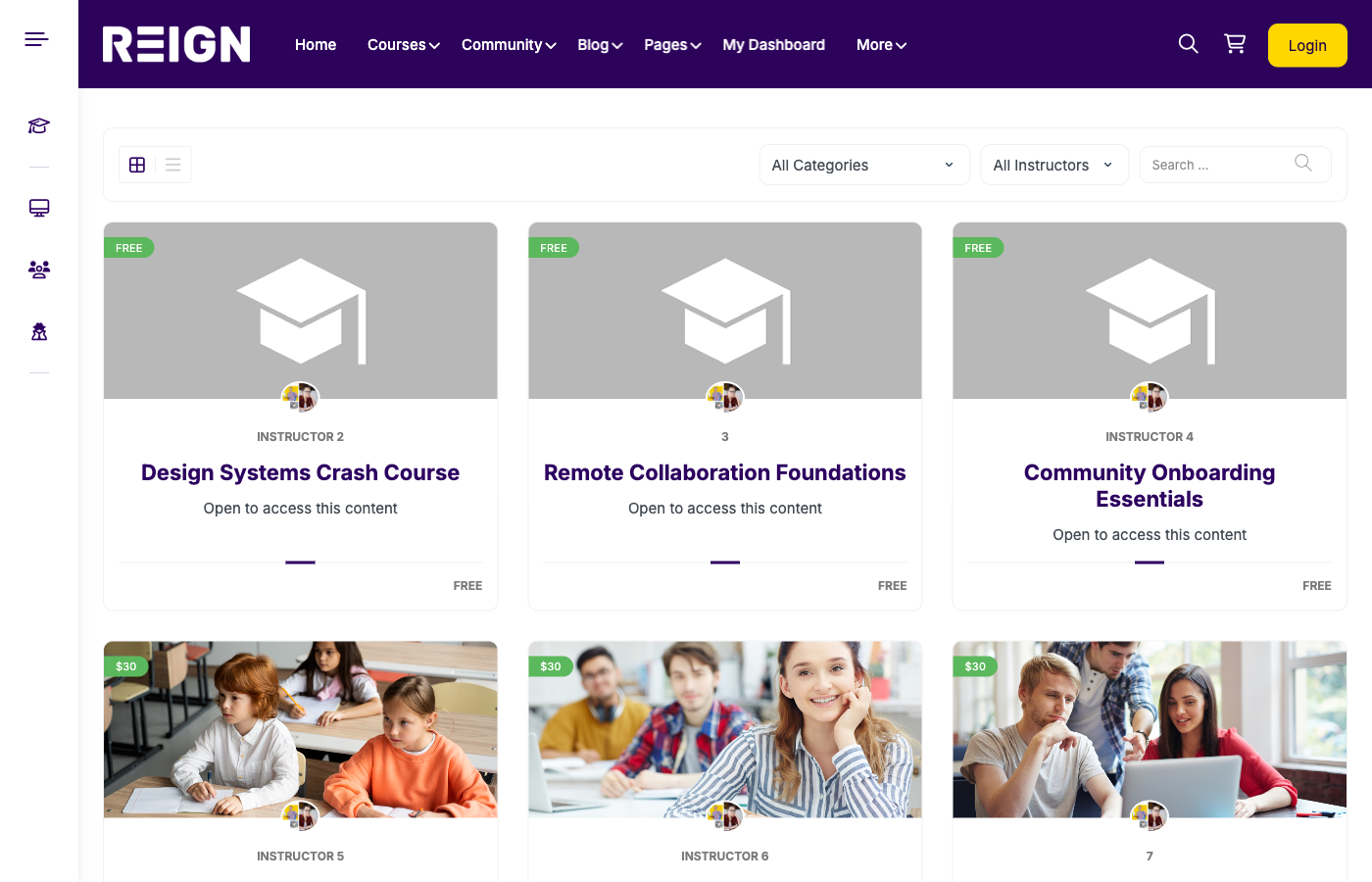
Place image: blog-screenshot/avoid-platform-fees-course-site-grid.png
Hidden costs most creators miss
- Forced discounts during platform-wide promotions
- Limited branding control that reduces conversion rates
- Lost upsell opportunities due to restricted checkout
- Fewer options for memberships and bundles
What you gain beyond profit
- Full control of branding and student experience
- Ability to upsell memberships and coaching
- Ownership of your student data
- Long-term asset you can scale or sell
How to build a no-fee course platform with WordPress
- WordPress foundation: Own the platform.
- LearnDash LMS: Build courses with quizzes and drip content.
- BuddyPress community: Add engagement that keeps learners active.
- Reign theme: Deliver a premium course and community UX.
- Payments: Use WooCommerce or Stripe integrations.
Pricing models to increase lifetime value
- One-time course sales
- Subscription access to a library
- Bundles for career paths
- Cohort-based programs with community
SEO and organic growth benefits
Hosted platforms rarely provide deep SEO control. With WordPress, you can publish SEO-optimised blog content, build landing pages, and drive organic traffic that reduces paid ad dependency.
Profit-first checklist
- Calculate the total platform take rate, not just the subscription cost
- Estimate the lifetime value and how fees reduce it
- Compare hosted fees to a self-hosted stack
- Factor in upsell and membership revenue, you cannot run on hosted
When a self-hosted platform makes sense
- You already validated your course idea
- You are growing consistently and want better margins
- You need branding and community features
- You want to scale beyond a single course
Migration steps that reduce risk
- Export students and purchase data from your hosted platform.
- Rebuild courses in LearnDash with lessons and quizzes.
- Set access rules based on prior purchases.
- Recreate landing pages in WordPress.
- Communicate the move with clear onboarding emails.
Common mistakes to avoid
- Trying to migrate without a structured plan
- Overcomplicating the tech stack too early
- Ignoring onboarding and retention strategy
- Skipping analytics and revenue tracking
FAQ
Will self-hosting cost more?
Usually no. Your costs are predictable and do not scale with your student count the same way hosted fees do.
Is it hard to manage payments?
Payment setup is straightforward with WooCommerce or Stripe integrations.
Can I still use affiliates?
Yes. WordPress supports affiliate systems and tracking.
Launch with Reign + LearnDash + BuddyPress
To avoid platform fees and keep full ownership, build on WordPress with Reign, LearnDash, and BuddyPress. You get a powerful LMS, a built-in community layer, and a branded experience that helps you keep more revenue.
CTA: Stop paying platform fees and launch your own course site with Reign + LearnDash + BuddyPress.
