

Want the Udemy experience without marketplace fees? You can build a full multi-instructor course marketplace on WordPress and keep control of your branding, pricing, and data. The secret is getting the marketplace structure right and choosing a stack that supports courses and community at scale.
This guide walks you through the exact process to build a Udemy-like site with WordPress. You will learn how to plan your marketplace, set up instructor onboarding, structure your catalogue, handle payments, and launch with confidence.
What makes a Udemy-like marketplace work
A successful marketplace has three core pillars: discovery, trust, and engagement. Discovery helps students find the right course. Trust helps them buy. Engagement keeps them learning and referring others.
Discovery is all about categories, filters, and clear course positioning. Trust comes from instructor profiles, reviews, and proof of outcomes. Engagement is powered by community, progress tracking, and support.
Udemy-like platforms also rely on consistent standards. Without quality control, the catalog grows but conversion drops. That is why policies, moderation, and instructor guidelines are essential from day one.
Minimum marketplace features
- Multi-instructor profiles and dashboards
- Course catalogue with filters and search
- Course detail pages with reviews and outcomes
- Payments and enrollment flow
- Community or discussion area
Marketplace planning: categories, revenue, and policies
Start by defining your niche or theme. A broad catalog is attractive, but a focused marketplace converts faster because it speaks to a clear audience. Choose categories that map to the problems your audience wants to solve.
Decide your revenue model. Most marketplaces use a commission split between the platform and instructor. Some also offer memberships for all-access learning or premium cohorts with higher support.
Set policies early. Define what courses are allowed, what quality standards apply, and how instructors should structure content. Clear policies protect your brand and reduce disputes later.
Revenue model examples
- Commission: 20 to 40 percent of each sale
- Membership: monthly access to all courses
- Hybrid: membership plus premium course upsells
- Licensing: bulk access for teams or organisations
Best WordPress stack for a Udemy-like site
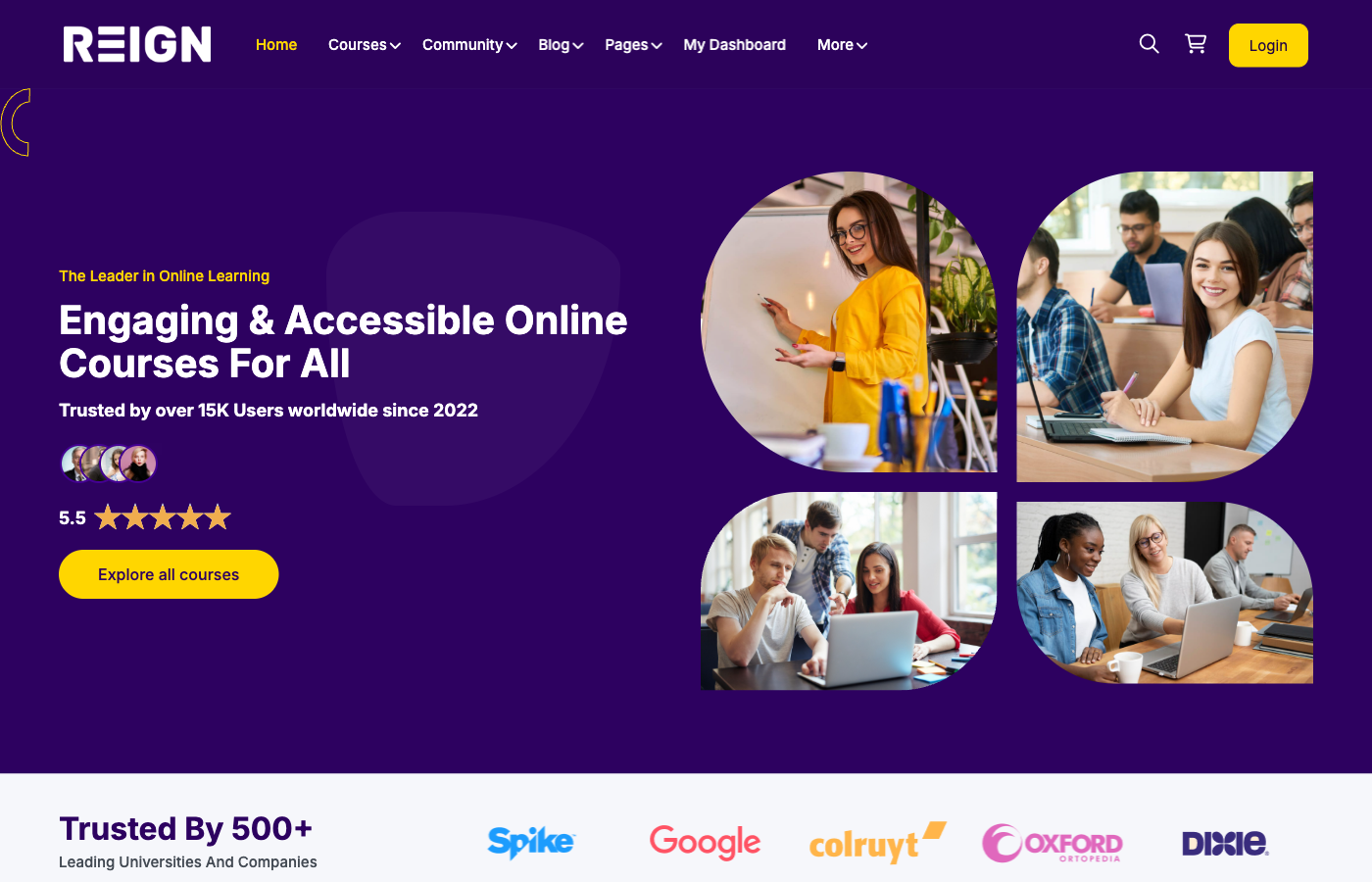
A Udemy-like marketplace needs a design layer, a learning management system, and a community engine. Reign provides a modern marketplace look and a social-first user experience.
LearnDash powers course delivery, lesson access, quizzes, and progression rules. It is proven at scale and integrates well with payment and membership tools.
BuddyPress provides instructor and student profiles, groups, activity feeds, and messaging. This adds the community layer that makes marketplaces feel alive and sticky.
Place image: blog-screenshot/how-to-build-udemy-like-site-wordpress-grid.png
Optional but helpful add-ons
- Membership plugin for subscriptions
- Affiliate system to incentivise instructors
- Video hosting or CDN for lesson media
- Analytics tracking for conversion funnels
Step-by-step setup: multi-instructor foundation
Start with hosting that can handle high traffic and media. A managed WordPress host with caching and backups will save time. Install WordPress and apply SSL.
Install Reign, LearnDash, and BuddyPress. Configure BuddyPress profiles and groups first, then configure LearnDash course settings and permissions.
Create user roles for instructors. You want instructors to manage their courses but not access platform settings. Use role management plugins if you need advanced permissions.
Set up the instructor onboarding flow. This includes an application form, an approval step, and a checklist for course creation. A structured onboarding process keeps the catalog consistent.
Instructor onboarding checklist
- Profile requirements and photo guidelines
- Course structure template and lesson rules
- Video and media standards
- Pricing rules and refund policies
- Marketing guidelines and promotions
Build the course catalogue and discovery experience
Your catalogue must be easy to scan. Use categories, tags, and filters to let students narrow choices. Highlight featured courses and top instructors to create social proof.
Search matters more than most people realise. Students often know the exact skill they want. A strong search experience improves conversions and reduces bounce rate.
Use badges such as “New,” “Bestseller,” or “Top Rated” to guide decisions. These small cues help students feel confident about choosing a course.
Course detail pages that convert
Course detail pages are where marketplace trust is won or lost. Each page should include learning outcomes, curriculum breakdown, instructor bio, reviews, and pricing. Use clear CTA buttons and keep the pricing visible.
Place image: blog-screenshot/how-to-build-udemy-like-site-wordpress-detail.png
Add preview lessons or short sample videos. A preview increases confidence and reduces refunds. It also helps the student judge teaching style.
Include social proof. Testimonials, ratings, and student results increase conversion. If you are new, use instructor case studies or early beta results.
Community and student engagement
Udemy-like marketplaces win on community. Create discussion groups for courses or categories. This helps students get answers and feel supported.
Use BuddyPress activity feeds so new discussions and achievements appear in one place. Encourage instructors to participate regularly to create momentum.
Place image: blog-screenshot/how-to-build-udemy-like-site-wordpress-community.png
Consider adding events like live Q and A, monthly challenges, or peer review threads. These engagement loops increase retention and improve review scores.
Payments, pricing, and marketplace economics
Choose payment gateways that are reliable and cover your target regions. Stripe and PayPal are common choices. If you need subscriptions, ensure your payment setup supports recurring billing.
Set your commission structure clearly. Some platforms use higher commissions on organic sales and lower commissions on instructor-driven sales. This encourages instructors to promote their own courses.
Use bundles and memberships to increase revenue per student. A student who buys one course may be willing to join a membership if the value is clear.
Refunds and compliance
Set clear refund policies and include them in checkout. Automate refunds where possible and keep support responsive. If you operate globally, pay attention to tax and VAT rules.
Quality control and moderation
A marketplace without quality control eventually loses trust. Build a review process for new courses. Check for structure, media quality, and clear outcomes.
Use community guidelines to keep discussions productive. Assign moderators or empower group leaders to keep discussions focused and respectful.
Collect feedback regularly. If students complain about a course, work with the instructor to update content or adjust expectations.
Instructor incentives and performance
Instructors need reasons to keep their courses updated and engage with students. Create incentive programs for high ratings, fast response times, or top enrollments.
Offer promotional boosts for instructors who hit quality thresholds. When instructors see real rewards, they invest more in course quality and community participation.
Share performance dashboards. When instructors can see conversion rates and enrollment trends, they make better content decisions.
Marketplace growth flywheel
Marketplaces grow when supply and demand feed each other. Start by building a strong supply base of instructors with proven expertise. Then focus on driving traffic to their courses and showcasing early success stories.
As student demand grows, instructors are more motivated to join, which expands the catalog and improves discovery. This cycle creates compounding growth if quality stays high.
Course production workflow for instructors
A consistent production workflow helps instructors deliver high-quality courses faster. Provide a course template with lesson length recommendations, assignment guidelines, and media standards.
Encourage instructors to batch record lessons and use a standard intro and outro. This reduces editing time and creates a more consistent learner experience across the marketplace.
Offer a quality review step where instructors submit draft courses for feedback. Even a light review checklist can prevent weak launches and improve ratings.
Legal, compliance, and platform protection
Every marketplace should define terms of service, refund policy, and content ownership rules. Instructors should know how their content is licensed and how payouts are handled.
If you operate globally, consider compliance with VAT and digital goods tax rules. For student privacy, make sure your privacy policy explains how data is collected and used.
Protect your brand by handling copyright issues quickly. A clear reporting process for flagged content keeps your platform credible.
Marketing your marketplace
Marketplace marketing requires both supply and demand. You need instructors to create courses and students to enroll. Start by recruiting a small group of high-quality instructors and help them succeed.
Build SEO pages for categories and high-demand topics. These pages will be your long-term traffic engine. Each page should include a brief introduction, featured courses, and links to instructor profiles.
Encourage instructors to promote their courses. Provide swipe copy, social templates, and affiliate links. Instructor-led marketing is one of the fastest ways to build momentum.
Launch strategy
- Recruit 5 to 10 strong instructors before launch
- Launch with a focused category or niche
- Offer a limited-time incentive for early students
- Use case studies and testimonials to build trust
SEO structure for marketplace sites
Category pages and course pages are your SEO backbone. Each category page should target a clear keyword like “Data Analysis Courses” or “Beginner UX Design.” Add short introductory text, highlight top courses, and link to instructors.
Optimize course pages for long-tail keywords such as “Excel for finance beginners” or “Email marketing for ecommerce.” These pages have higher purchase intent and often convert better than broad terms.
Analytics and optimisation
Track conversion rates, enrollment rates, and completion rates. Identify which categories perform best and double down on them.
Analyse instructor performance. Highlight top instructors in the catalogue and in marketing. Reward quality content and active community participation.
Use feedback loops to improve course pages and onboarding flows. Even small UX changes can improve conversion by a meaningful margin.
Common mistakes to avoid
- Launching with too many low-quality courses
- Skipping instructor guidelines and moderation
- Overcomplicating checkout with too many steps
- Ignoring community engagement until later
- Not tracking conversion data from day one
Checklist and FAQ
Pre-launch checklist
- Instructor onboarding flow is tested
- Course submission and approval process is ready
- Catalog categories and filters are configured
- Checkout and payments are working
- Community guidelines are published
- SEO metadata is added to key pages
FAQ
Can I build a Udemy-like marketplace without code? Yes. With WordPress, Reign, LearnDash, and BuddyPress, most of the setup is configuration rather than coding.
How many courses should I launch with? Start with quality over quantity. Ten strong courses can outperform a catalog of fifty weak ones.
What is the best niche for a marketplace? The best niche is one with clear demand and underserved learners. Research search volume and community interest before committing.
How do I handle instructor payouts? Many marketplaces pay instructors monthly using a revenue split. Use accounting tools or payout plugins to automate this process.
Conclusion
Building a Udemy-like marketplace with WordPress is achievable if you focus on discovery, trust, and engagement. The right stack and a solid onboarding process turn your platform into a scalable business.
Launch a Udemy-like marketplace you control with Reign + LearnDash + BuddyPress. You keep the brand, the data, and the long-term value.