A WordPress site that only handles text and static images leaves a lot on the table for anyone working with audio, a musician sharing new tracks, a podcaster archiving episodes, a worship group streaming service recordings. The core WordPress media library plays audio files in a bare-bones way, functional but not built for browsing a catalog or building a listening experience. The plugins below fill that gap, from simple embed players to full album-and-playlist systems, without requiring a paid theme or a developer to wire up.

Matching the Plugin to What You’re Actually Building
Before picking from the list below, it helps to be honest about what you’re actually trying to do. A musician promoting a single release needs something different from a podcaster managing a hundred-episode back catalog, which needs something different again from a site owner who just wants a small background music widget in a sidebar. Trying to force a heavyweight album-management plugin to do a simple job adds unnecessary bloat, and trying to stretch a lightweight widget into managing a full podcast feed will frustrate you fast. Match the tool’s actual scope to your actual need first.
It also helps to think about who’s actually uploading content. A single-artist site where you control every upload can use almost any plugin on this list without issue. A multi-contributor site, several band members, several podcast hosts, several community musicians, benefits more from plugins with clearer permission structures and per-user organization, since you’ll want contributors managing their own tracks without accidentally editing someone else’s.
1. AudioIgniter
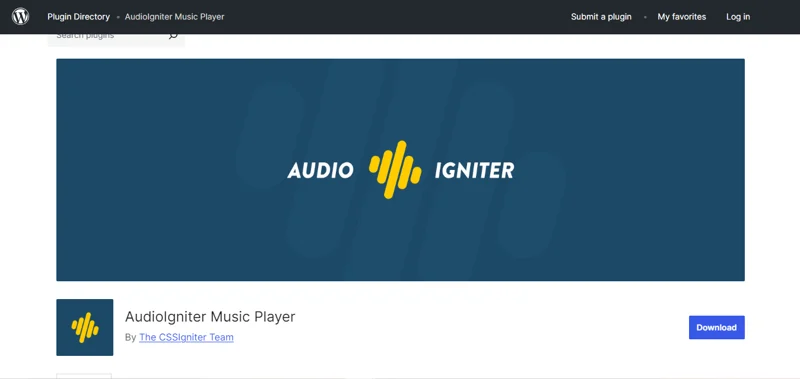
AudioIgniter aims squarely at musicians and podcasters who want a clean, branded player without wading through a settings panel full of options they’ll never touch. Upload tracks, add cover art, organize into playlists, and the player styling adapts to fit reasonably well into most theme layouts without heavy custom CSS. It’s a solid default choice specifically because it doesn’t try to be everything, it’s a well-executed player, not a full catalog management system.
Key Features:
- Unlimited playlists and tracks
- Responsive design that adapts to most theme layouts
- Easy to embed audio on any page or post via shortcode
- Customizable player styles to match your site’s branding
2. Compact WP Audio Player
When the goal is genuinely minimal, one track, embedded cleanly, without extra chrome around it, Compact WP Audio Player does exactly that job and nothing more. Support for both MP3 and OGG covers most practical audio use cases, and the shortcode-based embedding means you can drop a player into any post or page without touching a settings screen at all. This is the right choice specifically when a heavier plugin’s playlist and album management features would go unused.
Key Features:
- Lightweight and fast-loading
- Shortcode support for easy embedding
- Responsive design
- Play audio files from a URL or upload directly to the media library
3. Music Player by Sonaar
Sonaar’s plugin is built for musicians who want their WordPress site to function like an actual music platform, not just a blog with an audio file attached. Full album and track management, a genuinely polished player interface, and direct WooCommerce integration for selling tracks or merchandise make this the most feature-complete option here, at the cost of a steeper setup than the simpler players above. If you’re building an artist site meant to be a real destination rather than a supporting page, this is worth the extra setup time.
Key Features:
- Unlimited playlists and tracks
- Highly customizable player design
- Integration with WooCommerce for selling music directly
- Responsive and mobile-friendly throughout
4. MP3 Music Player by Eazy
This one sits comfortably between the bare-minimum players and Sonaar’s full platform approach, more customization options than a basic embed, without the setup overhead of a complete music-site plugin. Multiple audio format support means you’re not locked into converting everything to MP3 first, and the shortcode system keeps embedding straightforward across different page builders and themes.
Key Features:
- Supports multiple audio formats
- Straightforward, approachable interface
- Shortcode support for embedding anywhere
- Highly customizable player settings
5. HTML5 jQuery Audio Player
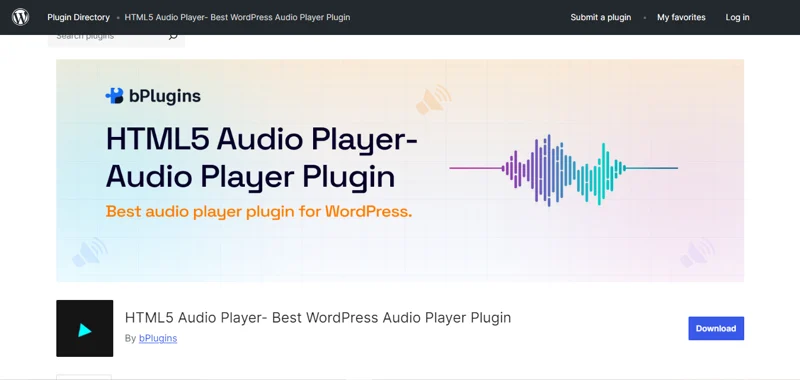
This player leans on modern browser-native audio handling rather than older Flash-era approaches, which means it loads faster and works consistently across devices without requiring extra plugins on the visitor’s end. The tradeoff for developers is that customization happens more through CSS than a friendly settings panel, so it suits someone comfortable editing a bit of styling code more than someone who wants everything configured through dropdown menus.
Key Features:
- Multiple audio file support
- Easy customization through CSS for developers
- Responsive design out of the box
- Lightweight and fast-loading
6. WaveSurfer.js
Most audio players give you a flat progress bar and not much else. WaveSurfer.js instead renders the actual waveform of the track, so listeners can see the audio’s shape, quiet sections, loud peaks, before and while they listen. That visual feedback genuinely changes the listening experience for music specifically, and it’s become something of a standard look for artist and label sites wanting to feel more polished than a generic embed.
Key Features:
- Interactive waveform visualizations
- Supports multiple audio formats
- Highly customizable appearance
- Lightweight despite the visual complexity
7. Simple Music Widget
Sometimes the actual requirement is small: a bit of background music or a featured track playing quietly in a sidebar or footer, not a full media section. Simple Music Widget does exactly that scoped job, pulling directly from your existing media library without requiring you to reorganize anything. It’s the right pick when a bigger plugin would be solving a problem you don’t actually have.
Key Features:
- Fast to set up with minimal configuration
- Shortcode support for embedding in widgets
- Plays audio files directly from the media library
- Responsive design
8. Audio Album
For an artist releasing full albums or EPs rather than single tracks, browsing by album makes far more sense to a visitor than a flat, undifferentiated track list. Audio Album organizes content that way natively, with customizable cover art per album, which matters more than it might seem for how a music site actually reads visually to a first-time visitor scanning a catalog.
Key Features:
- Create and manage multiple albums
- Pulls tracks directly from the media library
- Customizable album cover art
- Responsive design
9. SoundCloud Shortcode
If your music already lives on SoundCloud and you don’t want to duplicate hosting on your own server, this plugin solves a narrower but genuinely common problem: embedding SoundCloud tracks and playlists cleanly into WordPress posts and pages without pasting raw embed code. For anyone already building an audience on SoundCloud, this keeps your WordPress site and your existing platform presence in sync instead of maintaining two separate audio libraries.
Key Features:
- Straightforward SoundCloud integration
- Supports both playlists and individual tracks
- Customizable player styling
- Responsive design
10. Podlove Podcast Publisher
Podlove is built specifically for podcasting rather than music, which matters because podcasting has its own set of technical requirements, generating a proper RSS feed, chapter markers, episode metadata for directories like Apple Podcasts and Spotify, that a general audio player plugin doesn’t handle. If you’re publishing a podcast rather than music tracks, this dedicated tool saves you from bolting together several plugins to cover feed generation, episode management, and player display separately.
Key Features:
- Comprehensive podcast management tools
- Straightforward episode creation and management
- Supports multiple audio formats
- Generates a proper podcast RSS feed for directory submission
Comparison Table
Plugin | Best For | Standout Feature | Setup Complexity |
|---|---|---|---|
AudioIgniter | General-purpose musicians and podcasters | Clean, branded playlists out of the box | Low |
Compact WP Audio Player | Single-track, minimal embeds | Lightweight, fast-loading | Very Low |
Music Player by Sonaar | Full artist/band sites selling music | WooCommerce integration | Higher |
MP3 Music Player by Eazy | Middle ground between minimal and full-featured | Multiple format support | Low |
HTML5 jQuery Audio Player | Developers wanting CSS-level control | Modern, dependency-light playback | Medium (developer-oriented) |
WaveSurfer.js | Artist sites wanting a polished, visual player | Waveform visualization | Medium |
Simple Music Widget | Sidebar or footer background audio | Pulls straight from media library | Very Low |
Audio Album | Artists releasing full albums or EPs | Album-organized browsing | Low |
SoundCloud Shortcode | Creators already using SoundCloud | Native SoundCloud embed support | Very Low |
Podlove Podcast Publisher | Dedicated podcasting, not music | Full RSS feed and directory support | Higher |
Licensing and Copyright, Don’t Skip This
None of these plugins handle music licensing for you, that’s a separate, non-technical problem worth addressing before you upload anything. If you’re hosting your own original recordings, this isn’t a concern. If you’re embedding cover songs, sampled tracks, or anything you didn’t create and don’t hold rights to, you need the appropriate license or explicit permission regardless of which plugin delivers the audio. This applies whether the file lives on your own server or gets pulled in through an embed, a plugin makes distribution technically easy, it doesn’t make it legally clear. When in doubt, check with a music licensing service or the rights holder directly before publishing. This matters even for background music widgets, “it’s just ambiance on my sidebar” doesn’t exempt a site from the same licensing rules that apply to a dedicated music page, since the audio is still being publicly distributed to every visitor regardless of how prominently it’s displayed.
Performance Considerations for Audio-Heavy Sites
Hosting audio files directly on your WordPress server works fine at small scale, but a growing library of tracks or episodes adds real weight to your hosting bill and can slow page loads if files aren’t served efficiently. Two things help here: enabling lazy loading so players below the fold don’t load audio data until a visitor scrolls to them, and considering a CDN or dedicated audio hosting service (Podlove supports this pattern well for podcasts) once your library grows past a handful of files. A single-page site with three tracks doesn’t need to worry about this, a hundred-episode podcast archive does. Compression settings matter too, a well-encoded MP3 at a reasonable bitrate sounds essentially identical to most listeners compared to a much larger file, while cutting load time meaningfully, worth doing once at upload time rather than serving oversized files indefinitely.
Adding Audio to a Community or Membership Site
A slightly different case worth calling out: sites built around a member community rather than a single artist’s catalog. A BuddyPress-powered site for musicians, a local band’s fan community, or a podcast network with multiple hosts benefits from pairing one of these audio plugins with member profile features, letting each artist or host manage their own tracks alongside their community profile rather than dumping everything into one undifferentiated feed. A theme built for community sites, like BuddyX, gives that member-profile structure a home to plug an audio plugin into, so a listener browsing a member’s profile sees their tracks alongside their activity and connections rather than a separate, disconnected media page.
Common Setup Mistakes
The most frequent issue is uploading uncompressed WAV files instead of properly encoded MP3s, which bloats page load times without any audible quality benefit for most listeners on typical playback devices. The second is skipping alt text and proper titles on audio embeds, which hurts both accessibility for screen reader users and how well the content gets indexed or shared. The third, specific to podcast plugins like Podlove, is publishing episodes without validating the generated RSS feed before submitting to directories, a malformed feed can get an entire podcast rejected or delayed from listing.
A fourth mistake worth flagging separately: forgetting mobile playback entirely. Some older or less-maintained audio player plugins render fine on desktop but break or fail to autoplay correctly on mobile browsers, which enforce stricter rules around audio autoplay than desktop browsers do. Test any plugin you’re considering on an actual phone before committing to it site-wide, not just in a desktop browser’s mobile emulation view, real device behavior sometimes differs from what emulation shows.
Frequently Asked Questions
Can I use more than one of these plugins on the same site?
Technically yes, but it’s worth avoiding unless you have a genuine reason, running multiple audio player plugins at once can create JavaScript conflicts and inconsistent styling. Pick the one that matches your primary use case and stick with it.
Do any of these slow down my site significantly?
The lightweight players (Compact WP Audio Player, Simple Music Widget) add minimal overhead. Feature-rich options like Sonaar’s Music Player or Podlove carry more weight due to their broader functionality, reasonable for the value they provide, but worth testing your site’s load time after installation rather than assuming it’s negligible.
Is a paid plugin ever worth it over these free options?
For most personal sites and small catalogs, no, the free options here cover the core functionality well. Paid alternatives typically add advanced analytics, deeper WooCommerce integration for selling music at scale, or premium support, worth it specifically for a commercial music business, unnecessary for a hobbyist or small artist site.
Will these plugins work with any WordPress theme?
Most are theme-agnostic and rely on shortcodes or blocks that render independently of your theme’s design, so compatibility issues are rare. The exception is styling, a plugin’s default player colors and fonts may not automatically match your theme, and some CSS adjustment is often needed to make the player feel native to your site rather than visibly bolted on.
Can visitors download tracks, or only stream them?
This varies by plugin and is usually a configurable setting rather than a fixed behavior. Most players default to streaming only, but several, including AudioIgniter and MP3 Music Player by Eazy, let you enable a download button per track if you want to offer that option. Decide deliberately based on whether you want listeners keeping local copies of your files.
Do any of these plugins support live streaming rather than pre-recorded files?
None of the players in this list are built for live streaming specifically, they’re designed around pre-uploaded audio files. If live streaming is the actual goal, that’s a different category of tool entirely, worth researching separately rather than trying to adapt one of these.

Your Audio Journey Awaits
Finding the right music plugin comes down to matching scope to need, a simple sidebar widget for background ambiance, a full album system for a working musician, or a dedicated podcast tool if that’s what you’re actually publishing. Start with the smallest plugin that covers your real requirement rather than the most feature-rich option on the list, you can always upgrade to something heavier once the site’s audio needs genuinely outgrow it. And whichever one you pick, test it on a staging copy of your site first if you have one, audio plugins interact with theme CSS and JavaScript in ways that are easier to catch and fix before your visitors do.
Interesting Reads
10 Best AI Audio Repair Free Download
10 Best Software to Integrate All Blink Cameras