Alumni Portals Die of Quiet. Here Is What Universities Keep Missing.
Graduates do not return to an alumni portal for a giving campaign. They return to find each other. Why most alumni platforms go silent, and how to build one around the directory instead of the donation form.

Most alumni portals are built by advancement offices, and that shapes them in a way nobody quite intends. The homepage carries a giving campaign. The events page lists reunions. There is a news section about the institution’s achievements, and somewhere behind a login, a directory that is out of date because nobody has a reason to update it.
Then everyone wonders why engagement is poor and why the same 3 per cent of graduates do all the responding.
The mismatch is straightforward. The institution built a portal to ask alumni for things. Alumni want a portal that gives them access to each other. Those are not the same product, and building the first while hoping for the behaviour of the second is why so many alumni platforms go quiet within a year of launch.
The uncomfortable part is that the second product also raises more money, just not immediately and not by asking.
Why graduates actually come back
Ask alumni who do engage what brought them back, and the answers cluster into four groups. Only one of them is about the institution.
Finding someone. A graduate needs a contact in an industry, a city, or a company. They remember that people from their course went into that field. This is the single most common reason an alumnus logs into anything, and it is the reason a directory is the core product rather than a feature.
Being findable. The mirror image, and consistently underrated. Early-career alumni especially want to be visible to people who might hire, mentor or collaborate with them. A portal that makes them findable is doing something for their career, which is a far better reason to keep a profile current than institutional loyalty.
Mentoring, in both directions. Mid-career alumni are often genuinely willing to help, and rarely asked in a way that is easy to say yes to. Later-career alumni frequently want to give time before they want to give money.
Nostalgia and their own cohort. Real, but narrower than institutions assume. It drives reunion attendance and very little else, and it fades. A portal built on nostalgia has a short half-life.
Notice what is not on that list. Institutional news, giving campaigns and league table positions are things the institution wants alumni to care about. They are not why anyone opens a website.
The directory is the product
If you take one thing from this: the alumni directory is not a feature of the portal. It is the portal. Everything else is supporting structure.
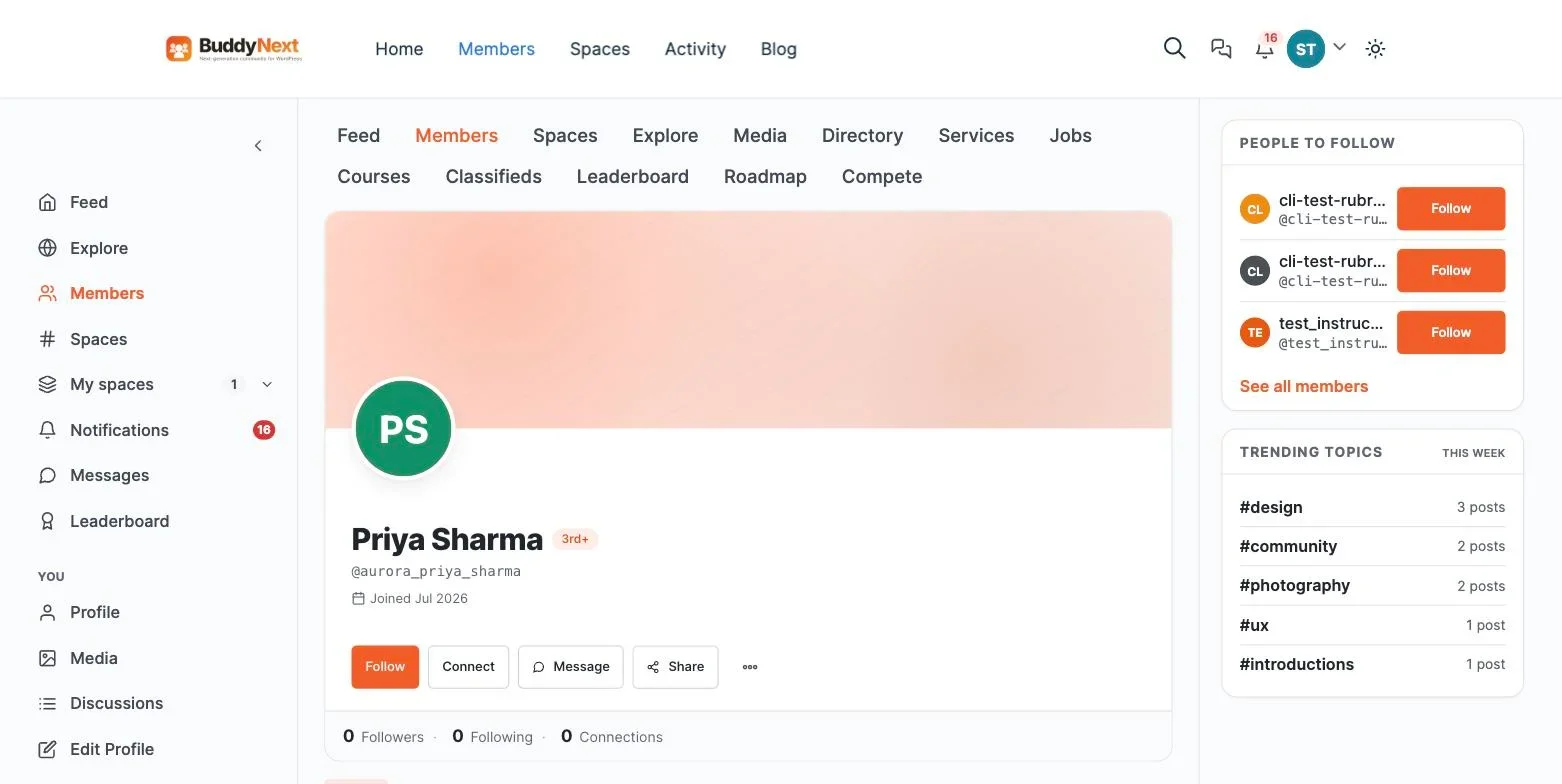
Which means the fields matter enormously, and most institutions get them wrong by importing whatever the student record system happened to hold.
The fields that make a directory useful:
- Graduation year and course. Obvious, and the basis of cohort identity.
- Current role and organisation. The thing alumni are actually searching on, and the thing most likely to be stale unless people have a reason to update it.
- City or region. “Who is in Singapore?” is one of the most common searches on any alumni platform.
- Industry or field, as a controlled list rather than free text, because free text does not filter.
- Willing to mentor, as an explicit yes or no. This single checkbox is the difference between a directory and a mentoring programme, and it costs nothing to add.
- Happy to be contacted about, as a multiple choice: careers advice, work experience, speaking, recruitment, nothing.
That last field is the one that unlocks the rest. Alumni do not withhold contact details because they are unwilling to help. They withhold them because they cannot control what they are contacted about. Give them a way to say “yes to careers questions, no to fundraising” and participation rises sharply.
And per-field visibility is not optional here. An alumnus should be able to show their employer to fellow graduates, their city to everyone, and their email address to nobody, changing any of it in ten seconds.
Why the data goes stale, and the only fix
Every advancement office has the same complaint: the alumni records are out of date. The usual response is a data cleansing project, which produces accurate data that decays again within two years.
Records go stale because nobody has a reason to update them. An alumnus who changes job has no incentive to tell an institution that will use the information to ask for money.
The only durable fix is making the profile useful to its owner. If being findable helps an alumnus professionally, they maintain their own record, because it is their shop window rather than your database row. Institutions that get this right stop running data projects and start seeing profiles updated within weeks of a job change.
That is a strategic shift more than a technical one. It means the portal has to be visibly for alumni rather than for the institution, and that has to be true on the homepage rather than in the mission statement.
Structure: cohorts, cities, industries
A 40,000-strong alumni body cannot have one shared feed. It needs spaces, and the useful ones fall into three families.
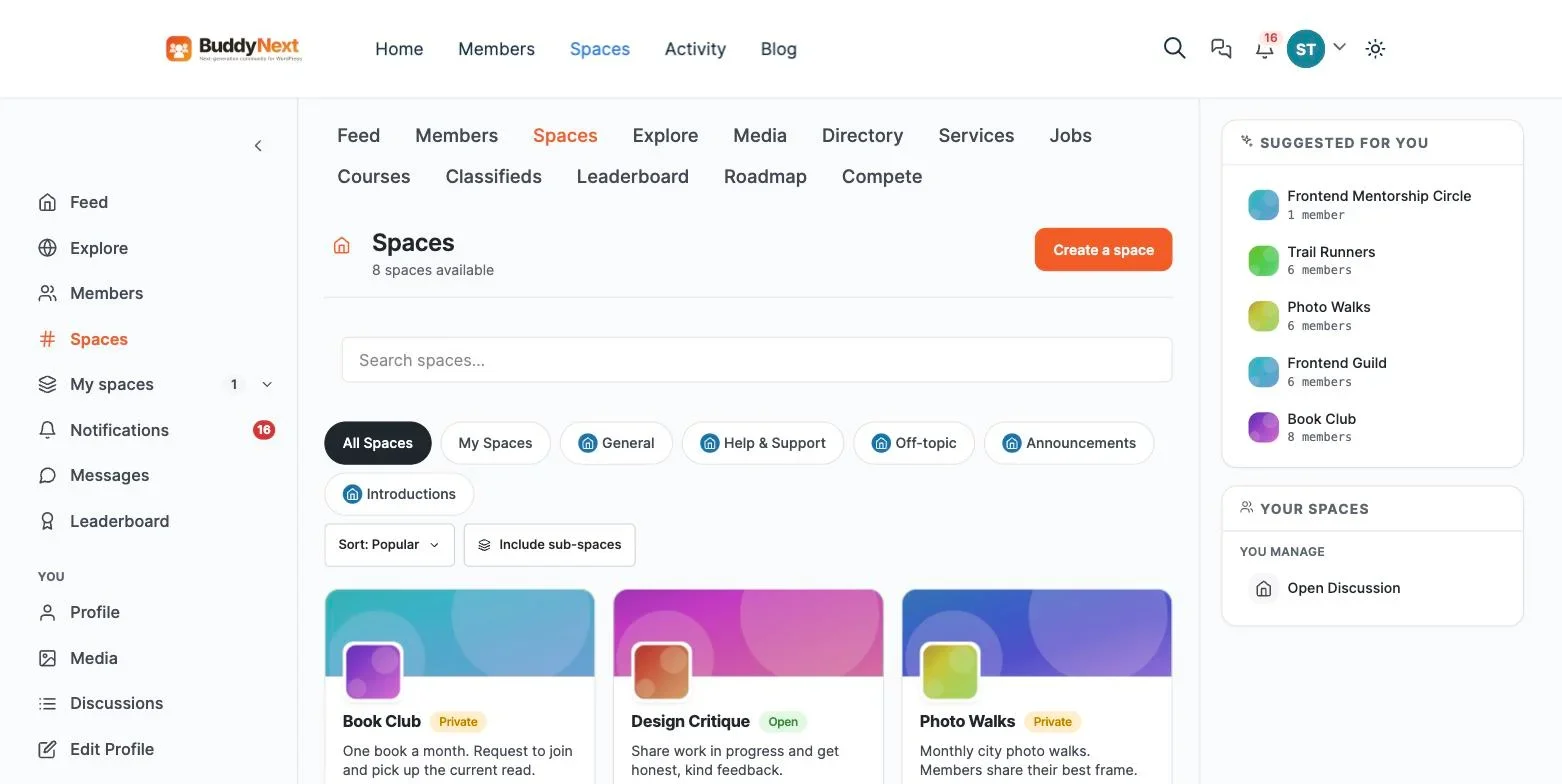
Cohorts by graduation year or course. Strong identity, high initial engagement, and a tendency to go quiet after the first reunion unless something else holds them.
Cities. The most durable of the three, because they have practical value. Alumni move, arrive somewhere knowing nobody, and want a local contact. City spaces stay alive for decades where cohort spaces fade.
Industries. The most valuable for careers outcomes, and the ones most likely to attract mid-career alumni who have stopped caring about their graduation year. An alumnus who has not thought about the institution in fifteen years will still join a space full of people in their field.
Start with four or five, not forty. Empty spaces read as an abandoned building, and forty of them read as a failed launch. Add more when a volunteer asks to run one, which is also the signal that a real group exists to fill it.
The cohort cliff, and how to survive it
Every alumni community meets the same problem in its second year. Cohort spaces launch with real energy, because a graduating year genuinely knows each other, and then they fade. Within eighteen months most cohort spaces are silent, and institutions read that as the community failing.
It is not failure. It is the natural life cycle of a group defined by something that stops being relevant. People care about their graduation year intensely for a few years and then progressively less, until it becomes a fact about them rather than an identity.
Three things carry a community past the cliff.
- City spaces, which do not decay. Someone moving to a new city needs local contacts whether they graduated in 2003 or 2023. These spaces refresh their membership constantly as people relocate, which is exactly what cohort spaces cannot do.
- Industry spaces, which grow more relevant with time. A graduate five years out cares more about their field than their year group, and fifteen years out cares about it a great deal. Industry spaces are the ones that hold mid-career alumni, who are also the ones with the capacity to mentor and to give.
- Letting quiet spaces go quiet. Do not fight it, and do not post filler into a cohort space to keep numbers up. Archive spaces that have been silent for six months so the directory keeps meaning something, and tell people they can be revived on request.
Institutions that plan for the cliff build cohort spaces knowing they are temporary and invest early in the two families that last. Institutions that do not spend year three trying to resuscitate 2019 and concluding that alumni are not interested.
Volunteers, not staff
An alumni office of three cannot animate a community of 40,000. Every alumni portal that works runs on volunteers: a chapter lead in each city, a convenor per industry space, a year representative per cohort.
That requires per-space roles, so a volunteer in Singapore can approve members and moderate their own space without holding an administrator account on the institution’s website. It also requires a short written brief covering what a volunteer decides alone, what they escalate, and who to contact. Two pages is enough, and without it volunteers either over-moderate or freeze.
Recruit volunteers before launch rather than after. A community that opens with familiar names already posting converts far better than one that opens empty and hopes.
The fundraising question, answered honestly
Advancement offices fund these platforms, so the return has to be real. It is, but the mechanism is indirect and the timeline is longer than a campaign cycle.
What does not work is putting the giving campaign at the centre. A portal that greets alumni with a donation ask trains them to stop opening it, and the engagement you lose costs more than the campaign raises.
What does work is sequence. Engagement first, over years. Alumni who use the portal, attend things, mentor students and stay connected give at higher rates and higher amounts than those who receive only appeals, and they say yes to the first ask rather than the fourth. Volunteering is also the strongest single predictor of later giving, and a portal is the cheapest volunteering infrastructure an institution can build.
Practically, this means the giving link belongs in the navigation rather than the hero, campaigns belong in an announcements space rather than the main feed, and the portal’s success should be measured on engagement rather than attributed income for at least the first two years. That is a difficult conversation with a development director and it is the conversation that determines whether the platform survives.
Building it on WordPress
Alumni platforms are typically priced per record, which is punishing for institutions whose alumni body only ever grows. Hivebrite, one of the more common choices, runs from $10,740 a year on its Core plan with enterprise contracts in the $25,000 to $50,000 band.
BuddyNext is a free, standalone WordPress community plugin covering what an alumni portal needs: profile field groups with per-field visibility, member types for graduation era or membership status, a searchable member directory, an activity feed with polls and announcements, spaces with public, private and secret visibility plus per-space roles for volunteers, a visibility-scoped search index, and moderation with reports, suspensions, a log and appeals. It does not require BuddyPress.
Direct messaging comes from the companion WPMediaVerse plugin, which matters here because most valuable alumni contact is one to one rather than broadcast.
The structural advantage is the absence of a per-record fee. An alumni body of 40,000 costs the same to host as one of 4,000, which means the institution never has to decide whether a graduate is worth a licence.
Building the mentoring programme the portal makes possible
The mentoring checkbox is cheap to add and worthless on its own. What turns it into a programme is a small amount of structure around it, and this is where most institutions either overbuild or do nothing.
Overbuilding looks like a matching algorithm, an application process, a six-month commitment and a training module. It produces a handful of carefully matched pairs and excludes everyone who would have helped for twenty minutes. Doing nothing looks like a checkbox and a hope.
The version that works sits between them.
- Offer graduated commitments. “Happy to answer a question by message” is a much easier yes than “willing to mentor.” Most alumni will do the first and few will sign up for the second, and the first is where the majority of the value is.
- Let students and alumni find each other directly. Directory search plus a message button handles ninety per cent of demand without staff involvement. Reserve formal matching for structured schemes with a specific cohort.
- Set expectations in the profile itself. A short line saying what someone is happy to help with, and roughly how often, prevents both awkward requests and unanswered ones.
- Run it inside a space rather than by email. A careers space where questions are asked publicly means one answer serves many students, and other alumni chip in with better answers than any single mentor would give.
- Close the loop visibly. When a mentoring connection leads somewhere, post about it with permission. Nothing recruits mentors like evidence that mentoring worked.
The reason this matters beyond the students is that mentoring is the strongest predictor of later giving that most institutions have. An alumnus who spent an hour helping a student has an active relationship with the place. One who received four appeals does not.
What alumni platforms cost, and what you are buying
Approach | Typical cost | Scales with alumni count? | Who holds the data |
|---|---|---|---|
Dedicated alumni SaaS | Five figures a year, rising | Yes, usually per record | The vendor |
General community SaaS | Four to five figures | Yes, per member | The vendor |
Self-hosted on WordPress | Hosting, plus optional licences | No | The institution |
LinkedIn group | Free | No |
The per-record column is the one that shapes behaviour over time. An alumni body only grows, so a platform priced per record produces a bill that rises every graduation while the value per record falls, since each new cohort is less engaged than the active core. Institutions respond by trimming records, which means removing exactly the disengaged alumni a portal was meant to re-engage.
Self-hosting removes that dynamic entirely. It also puts the data governance question in a simpler place, which matters when the records concern named individuals across many jurisdictions and the institution has its own obligations regardless of what a vendor promises.
What you give up is real: no vendor support contract, no compliance certificate to hand a partner, and somebody internal has to own updates and backups. For a large institution with an established IT function that is routine. For a small alumni office with no technical support it is a genuine reason to buy rather than build.
Launching without embarrassment
- Decide the consent model first. What is visible to other alumni, what is visible to the institution, and what is opt-in. Alumni data is sensitive and a portal that gets this wrong loses trust permanently.
- Build the profile fields before importing anyone. Changing the schema at 40,000 records is a project. Changing it at zero is an afternoon.
- Seed the directory with staff and volunteers. Two hundred complete profiles make a directory look alive. An empty one signals that nobody uses this.
- Recruit volunteers for four spaces and let them post before you open the doors.
- Launch to one cohort or one city, not to the whole alumni body. A busy space of eighty people persuades a board far better than a silent portal of 40,000.
- Do not run a campaign in month one. Let the thing establish what it is for before you ask it to do anything for the institution.
What to measure
- Profiles updated in the last twelve months. The single best indicator of whether the portal is useful to its users rather than to you.
- Connections and messages between alumni. The value being created. If this is near zero, the directory is not working regardless of login numbers.
- Mentoring matches made. The outcome most likely to persuade a finance committee, and the one most directly traceable to the portal.
- Returning users who were not sent an email. Strip out campaign-driven traffic and see what remains. That is your real engaged population.
Total registered alumni is the metric most often reported and the least informative. Forty thousand dormant accounts and four hundred active ones is a portal with four hundred users.
Frequently asked questions
Should current students have access?
Yes, and it is one of the highest-return decisions available. Students who join in their final year arrive as alumni already inside the community rather than being invited to something unfamiliar after graduating. It also gives mentoring an obvious population to serve, which is what makes the mentoring field worth having.
How do we handle alumni who do not want to be contacted at all?
Respect it completely and make it easy to express. A granular “happy to be contacted about” field with an explicit “nothing” option produces better data than a single opt-out, because most people who decline everything are actually declining one specific thing. Do not treat non-participation as a problem to solve with more email.
Can we integrate with our CRM or advancement system?
Yes, and the division should be that the advancement system remains the system of record for giving history and formal alumni status, while the portal owns profiles, connections and community activity. A REST API and outbound webhooks make that synchronisation straightforward. Do not attempt to make the community platform the master record for donations.
What about alumni who prefer LinkedIn?
Many will, and competing head-on is a losing proposition. What LinkedIn cannot offer is a verified, institution-specific directory filtered by course and graduation year, closed spaces for a cohort, or a mentoring programme with any structure. Position the portal as the thing LinkedIn is not, and link out rather than pretending it does not exist.
Do we need a separate portal per school or faculty?
Almost never. Separate portals fragment the directory, which is the one asset that gets more valuable the larger it is. Use spaces per school inside a single portal instead, so a graduate can belong to their faculty group and still search the whole alumni body when they need a contact in an industry their own faculty does not feed.
How long before it is self-sustaining?
Twelve to eighteen months for a large alumni body, and it depends almost entirely on volunteer recruitment rather than software. Institutions that put staff effort into finding and supporting space volunteers in year one get there. Institutions that launch a platform and wait do not.
Where to start
Look at what proportion of your alumni records have been updated by the alumnus rather than by staff in the last two years. If that number is small, your portal is not currently useful to the people in it, and no amount of campaign email will change that.
Then build the directory properly, with the mentoring and contact-preference fields, and launch it to one city chapter that already meets. Our full walkthrough on building a community portal on WordPress covers the setup, and the piece on why member portals go quiet covers the same failure mode in professional bodies.