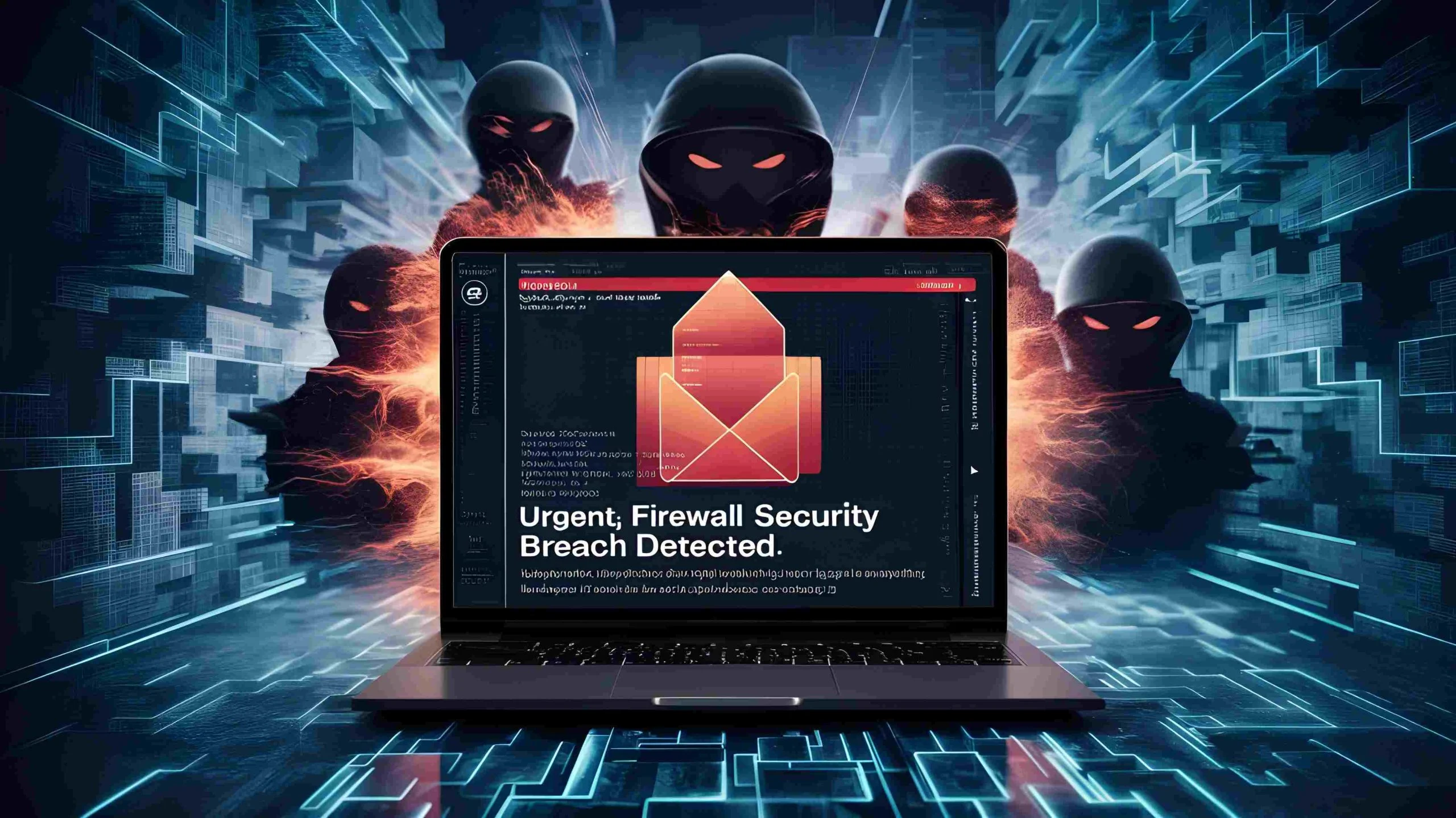
Nobody breaks into a WordPress site cold. Every real attack starts with reconnaissance, and one of the first pieces of intelligence an attacker wants is your admin email address. It’s not the flashiest target on a WordPress site, but it’s arguably one of the most valuable, since it sits at the center of account recovery and every notification tied to who actually controls the site.
This matters because the admin email isn’t protected the way a password is. Most site owners think about password strength constantly and never think about email exposure at all, which is exactly the gap that makes this worth understanding.

Why an email address is worth attacking at all
An admin email is the recovery key for a WordPress account. Reset a password, and the reset link goes there. That single fact makes it valuable on its own - an attacker who controls or intercepts that inbox effectively controls the WordPress account behind it, password or not.
Account takeover is the most direct consequence. With a confirmed admin email, an attacker attempts a password reset, and if they’ve also gained access to the inbox itself through some other compromise, they walk straight into the dashboard without ever guessing a password.
Phishing is the second major use. A known admin email lets an attacker craft a convincing, personalized message pretending to be a hosting provider, a plugin vendor, or WordPress itself, aimed specifically at the person who actually manages the site. Generic phishing gets ignored. Targeted phishing, sent to a confirmed real admin address, gets opened far more often.
Spam and malware distribution follow once an inbox is actually compromised, using the credibility of an established site’s email to push malicious content to that site’s users or customer list, trading on trust the site spent years building.
And a confirmed admin email becomes a pivot point for further exploits - cross-referenced against data breaches from other services to check for password reuse, or used to identify the same person’s presence on other platforms where a different security gap might exist.
Method 1: Brute force attacks on the login page
The most direct approach is also the least subtle. Automated scripts hammer the login page with repeated guesses at username and password combinations. Most of the time this fails outright against reasonably strong credentials, but it occasionally reveals something useful along the way: some poorly configured sites display different error messages depending on whether the submitted email or username actually exists in the system, which quietly confirms a valid admin account even when the password guess itself was wrong.
Defending against it
Limiting login attempts through a plugin like Limit Login Attempts Reloaded or WP Login Security stops the repeated-guessing approach cold by locking out an IP address after a handful of failed tries. Two-factor authentication adds a second barrier that makes a correctly guessed password essentially useless on its own, since the attacker still needs a second, time-sensitive code they have no way to generate. Moving the login URL away from the predictable /wp-admin or /wp-login.php default reduces the volume of automated attempts hitting your site at all, since a lot of scanning traffic never bothers looking beyond the default path.
Method 2: Exploiting contact forms and comment sections
Automated bots crawl WordPress sites specifically looking for exposed email addresses sitting in contact forms, comment threads, or raw HTML source code. Some site owners unknowingly publish their actual admin email directly in a contact form’s visible text or a page footer, handing it over without any scraping required at all.
Defending against it
A proper contact form plugin like Contact Form 7 or WPForms routes messages through the form itself rather than displaying a raw mailto link anywhere on the page, which keeps the underlying address out of the rendered HTML entirely. CAPTCHA on forms and comment sections adds friction that stops a large share of automated crawling before it gets anywhere near your content. An email obfuscation plugin or technique - encoding the address so it displays normally to a human visitor but doesn’t appear as plain, scrapable text in the page source - closes the gap on any spot where an address genuinely needs to be visible.
Method 3: Scraping the author archive page
WordPress automatically generates an archive page for every author, listing what they’ve published. That page reveals more than just a list of posts - depending on configuration, it can expose the author’s username, and username-to-email guessing gets meaningfully easier once an attacker knows the exact username format a site uses.
This risk compounds when a site uses the same value for both the login username and the public display name, since the author page then hands over the actual login credential half of the account directly, saving an attacker the trouble of guessing it separately.
Defending against it
Set the admin account’s display name to something different from the actual login username, breaking the direct link between what’s publicly visible and what’s needed to log in. If individual author pages aren’t a feature your site actually needs, disabling them entirely through a plugin or theme setting removes this exposure completely rather than just mitigating it. Where author pages do need to stay active, restrict exactly how much personal information appears on them - no email, no unnecessary personal details beyond what publishing actually requires.
Method 4: Enumerating usernames through the REST API
WordPress’s REST API is genuinely useful - it’s what lets themes and plugins, along with external applications, interact with your site’s data programmatically. It’s also, unfortunately, a channel an attacker can query directly to pull a list of registered usernames if it isn’t locked down.
Tools built specifically for this, like WPScan, automate the process of running these kinds of author and user enumeration scans across a target site, turning what would be tedious manual probing into a fast, automated first step of a broader attack.
Defending against it
Restricting REST API access for unauthenticated, logged-out visitors closes off the most common enumeration path, using a plugin like Disable WP REST API to limit what anonymous requests can actually retrieve. A dedicated plugin like Stop User Enumeration specifically targets and blocks the various techniques - REST API queries among them - that attackers use to pull usernames off a WordPress install.
Method 5: Digging through outdated themes and plugins
Poorly coded or outdated themes and plugins occasionally leak sensitive information as an unintended side effect of bugs never fully patched - admin details showing up in site metadata, debug output, or system notifications that were never meant to be publicly visible in the first place. An attacker who finds one of these leaks doesn’t need to break into anything; the information is just sitting there.
Defending against it
Keeping every theme and plugin updated closes known vulnerabilities as they’re patched, which matters enormously given how many of these issues get publicly documented the moment a fix ships - meaning an unpatched site is effectively broadcasting exactly what’s wrong with it to anyone checking version numbers. Installing only from trusted sources - the official WordPress Plugin Repository or reputable, established developers - reduces the odds of running something poorly maintained or, worse, deliberately malicious in the first place. Periodic security audits using a plugin like Wordfence or Sucuri catch issues proactively rather than waiting for something to actually go wrong first.

What happens after an admin email is actually compromised
Understanding the aftermath makes the defense work feel less abstract. Once an attacker has confirmed a valid admin email, the next move depends on what other access they’ve managed to combine it with.
If they’ve paired the email with a password obtained from a separate data breach - a real risk given how often people reuse passwords across different services - they attempt a direct login using that combination before trying anything more elaborate. This is precisely why using a unique password for the WordPress admin account, one that isn’t shared with any other login anywhere, matters as much as the email protections themselves.
If they don’t have a working password, the confirmed email becomes the target of a password reset attempt instead, betting that they can also access the inbox itself through a separate compromise of the email provider, or through a phishing message crafted specifically around the fact that they already know this is a real, active WordPress admin account.
If neither of those paths works immediately, the confirmed email still has value as a target for an ongoing phishing campaign, sent whenever the attacker has time to craft something convincing, rather than a single opportunistic attempt.
Signs your admin email may already be exposed
A sudden increase in phishing emails referencing your WordPress site, your hosting provider, or a plugin you actually use, arriving at an address you don’t publicly associate with the site, suggests that email has already made it into some attacker’s target list. Unexpected password reset emails you didn’t request are a more direct signal - someone out there has your admin email and is actively testing whether they can trigger a reset.
An uptick in failed login attempts visible in your site’s security logs, particularly ones using the correct username or email rather than random guesses, indicates the account has already been identified as a real target rather than caught in a purely random scan. None of these signs mean a breach has actually happened, but each one is a reason to review the defenses covered here rather than assuming everything is fine.
Putting the defenses together instead of treating them separately
None of these five methods operates in isolation from the others in a real attack. A realistic sequence looks like this: an automated scan enumerates usernames through the REST API, cross-references those against the author archive to confirm display names, checks contact forms and comments for a leaked email address, and finally runs a vulnerability check against whatever outdated plugins are visible. Each individual defense closes one specific door, but the layered combination is what actually makes a site a poor target compared to the countless other WordPress sites out there with none of these protections in place.
That’s really the goal here - not making a site completely impenetrable, which isn’t realistic for anyone, but making it enough of a hassle that automated, opportunistic attacks move on to an easier target instead. Most attacks aren’t personally targeted at you specifically; they’re scanning thousands of sites looking for the ones that put up the least resistance.
Why multisite and agency-managed sites carry extra risk
A single WordPress install with one admin account is relatively straightforward to lock down. A multisite network, or an agency managing dozens of client sites through shared admin accounts, multiplies the exposure surface considerably. Every additional admin account is another potential email to enumerate, another inbox that could be compromised, another point where one weak link compromises access to everything connected to it.
Agencies in particular should treat this as a checklist item for every new client site rather than a one-time setup applied only to their own primary properties. A client site left with default settings - predictable login URL, exposed author pages, an unrestricted REST API - is exactly the kind of soft target that gets picked off in a broad, automated scan, and the reputational cost of a client site getting compromised under an agency’s management tends to outweigh the modest time investment needed to close these gaps upfront.
Shared or generic admin accounts used across multiple sites compound the risk further. If one of those accounts gets compromised anywhere, every site using the same credentials becomes exposed simultaneously rather than the damage staying contained to a single install.
A quick self-audit you can run today
Search your own site for your admin email in plain text - check contact page source code, comment sections, and any footer content. Visit your own author archive page and see exactly what it reveals about your username. Try accessing your site’s REST API user endpoint directly in a browser and check whether it returns more information than it should to an unauthenticated visitor. None of this requires special tools, just the same browser you use every day pointed at your own site with an attacker’s checklist in mind.
Frequently asked questions
Is changing my admin email address itself a useful defense?
Using an email address that’s harder to guess and isn’t reused across other public-facing accounts reduces the value of that address if it does leak, but it doesn’t address the underlying exposure paths described above. The methods here are worth fixing regardless of which specific address is behind the account.
Do these risks apply to small sites, or only high-traffic ones?
They apply to every WordPress site regardless of size. Most of the scanning described here is fully automated and untargeted - bots checking thousands of sites for the same common weaknesses, not attackers who specifically chose your site because of its traffic level.
Does using a security plugin handle all of this automatically?
A comprehensive security plugin covers a meaningful share of these protections - login attempt limiting, REST API restrictions, and vulnerability scanning are common built-in features. It’s still worth manually confirming display name settings and checking whether your admin email appears anywhere in plain text, since those are configuration choices a plugin can’t fully make for you.
How often should I re-check these protections?
Revisit this after any major plugin or theme change, any new contact form or comment feature added to the site, and at minimum once or twice a year as routine maintenance. Configuration drift happens quietly - a plugin update can silently reset a setting, or a new form added months later might not have the same protections applied as the original.
Should the WordPress admin account and the site’s public “contact us” email be the same address?
No, and this is one of the more common setup mistakes. Using a separate, dedicated address for the admin login - one never published anywhere on the public site - removes the single easiest way an attacker finds that address in the first place. The public contact email can be whatever’s convenient for customer communication without that choice weakening the account that actually controls the site.
Protecting an admin email isn’t a single setting you flip once and forget. It’s a handful of small, unglamorous habits - restricting what’s publicly visible, keeping software current, adding friction to automated scans - that together make a site meaningfully less attractive to the automated reconnaissance running against WordPress sites constantly, whether you notice it happening or not.
None of these fixes takes more than a few minutes individually. Run through all five this week, note what’s already handled and what isn’t, and close whatever gaps turn up. The sites that stay unbothered by this kind of scanning are rarely the ones with the most sophisticated defenses. They’re just the ones that made the obvious, easy fixes before anyone came looking.